If your washing machine finishes a cycle but the drum is still full of water, the drainage system is blocked or a component has failed. The good news: many drainage problems have simple causes you can check at home in a few minutes. Here is how to diagnose it step by step.
Common causes of a washing machine not draining
- Clogged drain pump filter — lint, coins, and small objects collect here and block flow. This is the single most common cause.
- Kinked or blocked drain hose — the hose at the back can twist or clog with detergent scum.
- Blocked household drain — the wall drain or standpipe the hose empties into may be choked.
- Faulty drain pump — a burnt-out or jammed pump motor cannot push water out.
- Broken lid switch or door lock — many machines will not drain if they think the door is open.
- Drainage error code — front-loaders often show a code (e.g. 5E/5C on Samsung, OE on LG) when they cannot drain.
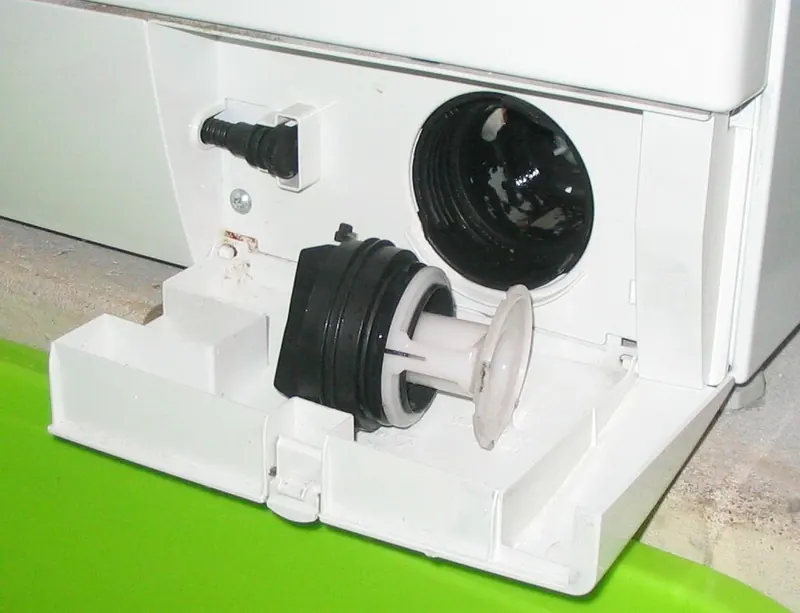
What you can safely check yourself
- Turn the machine off and unplug it. Never work on a machine that is powered on.
- Check the drain hose. Make sure it is not kinked, and that the end is not pushed too far down the wall drain. Detach it and check for blockages.
- Clean the pump filter. On front-loaders, open the small flap at the bottom front, place a towel and shallow tray (water will spill out), unscrew the filter and remove debris.
- Test the household drain by pouring a bucket of water into it — if it backs up, the wall drain is the problem, not the machine.
- Run a spin/drain-only cycle after clearing blockages to confirm.
Our technicians repair all brands across Bangalore with same-day doorstep service and transparent pricing from ₹350.
Find the fault by symptom
Drainage faults look slightly different depending on what your machine is actually doing. Match your symptom below to narrow down the cause before you open anything up.
Water not draining from the washer at all
If the drum is still full and the pump makes no sound during the drain cycle, the problem is usually electrical rather than a blockage — a failed drain pump, a blown pump fuse, or a control board that is not sending power to the pump. If you can hear the pump humming but no water moves, the pump is powered but jammed, which normally means debris caught in the impeller behind the filter.
Washing machine draining slowly or not completely
Water that drains but leaves an inch or two behind, or takes far longer than usual, almost always points to a partial blockage rather than a dead pump. The usual culprits are a half-clogged pump filter, lint build-up inside the drain hose, or a drain hose pushed too far into the standpipe. This is the easiest version of the fault to fix yourself and rarely needs a technician.
Washer won’t drain or spin
When draining and spinning both fail together, the machine is usually refusing to spin because it has not drained — a safety interlock that stops the drum spinning while full of water. Fix the drainage and the spin normally returns on its own. If the machine drains fully but still will not spin, the fault has moved elsewhere: worn carbon brushes, a failed motor, or a broken door-lock switch.
Machine drains but the water comes back
Water siphoning back into the drum points to how the drain hose is installed, not to a faulty machine. The hose outlet needs to sit at least 60 cm above floor level and must not be submerged in the standpipe. If the hose runs flat or the end sits in standing water, waste water gets pulled straight back into the drum after the pump stops.
Error code on the display instead
Most machines show a drainage-specific code rather than failing silently — Bosch E18/F18, LG OE, Samsung 5E/SE, IFB E3 and Whirlpool F05 all mean the same thing: the machine could not empty within the expected time. See our full washing machine error code guide for the complete list by brand.
When to call a technician
If the filter and hoses are clear but the machine still will not drain, the drain pump or control board likely needs attention — these require opening the machine and testing electrical components, which is best left to a professional. A failing pump often makes a loud humming or buzzing noise without moving water.
We repair drainage faults on all brands — Samsung, LG, IFB, Whirlpool and Bosch — across Bangalore with same-day doorstep service.
Typical repair cost in Bangalore
A pump filter clean-out is a minor job. A drain pump replacement typically ranges based on the brand and part. We always diagnose first and give you an upfront quote (repairs start at ₹350) before any work begins.